
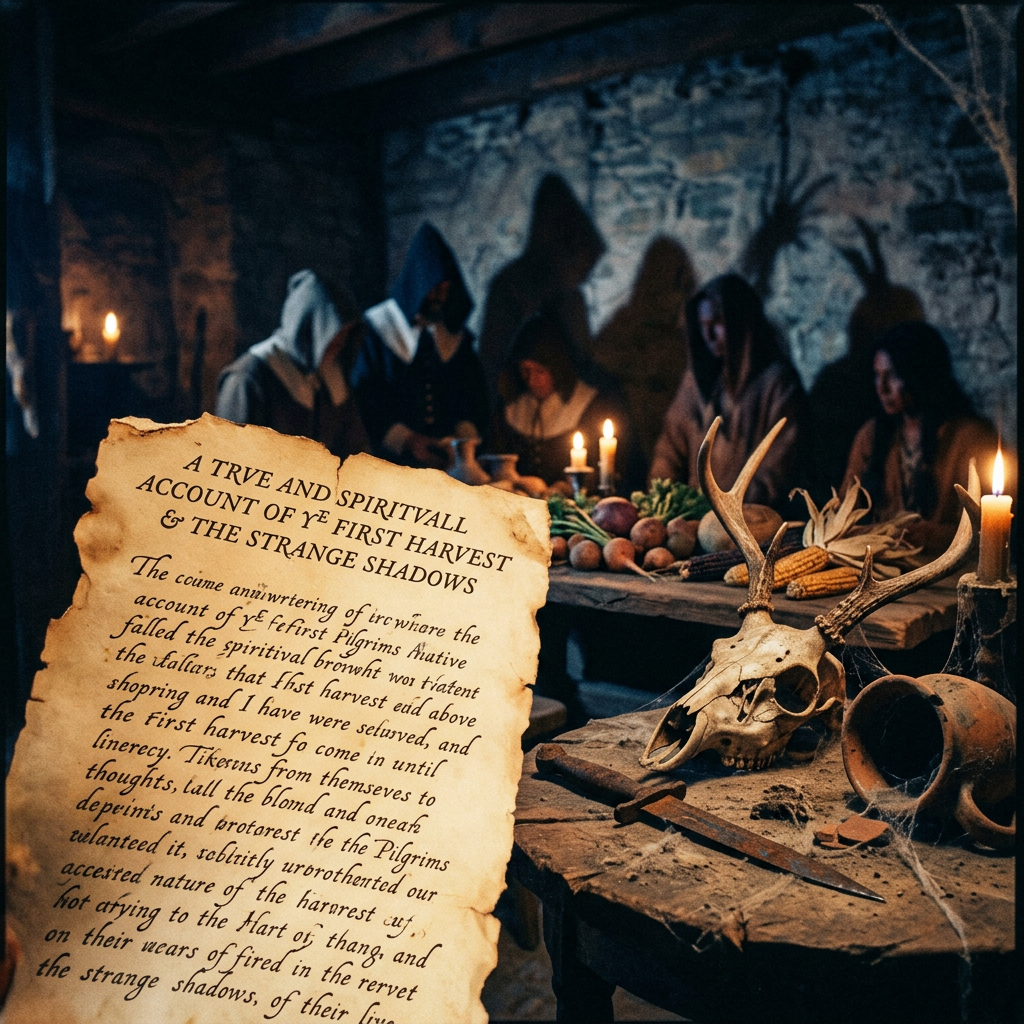
Thanksgiving is often portrayed as a peaceful feast shared by Pilgrims and Native Americans, but the real history is far more complicated—and, in some ways, unsettling.
The 1621 harvest gathering in Plymouth Colony did take place, but it was not the simple, friendly celebration familiar from children’s books. The Wampanoag people had lived in the region for generations before the Pilgrims arrived. Their communities had already endured devastating epidemics, likely introduced by earlier European explorers and traders. Entire villages were weakened or destroyed by disease, leaving survivors to face a rapidly changing world.
The Wampanoag leader, Ousamequin—also known as Massasoit—formed an alliance with the English settlers partly to strengthen his people’s position against rival groups. The gathering that followed was probably less a formal “first Thanksgiving” and more a diplomatic harvest celebration. It may have included venison, seafood, corn, squash, and other local foods, but the familiar turkey-and-pie menu is largely a modern invention.
The darker story emerged in the decades afterward. Relations between colonists and Native communities deteriorated as English settlements expanded and demanded more land. Disputes over territory, trade, and authority eventually contributed to King Philip’s War, a brutal conflict from 1675 to 1676. Thousands of Native people and colonists died, and many Native communities were displaced, imprisoned, or sold into slavery.
For some Native Americans, Thanksgiving is therefore not a cheerful origin story. Since 1970, activists and supporters have gathered at Cole’s Hill in Plymouth on the same day as the national holiday to observe the National Day of Mourning. The event honors ancestors, remembers Indigenous resistance, and calls attention to continuing injustices.
The ghostly truth of Thanksgiving is not found in haunted houses or supernatural legends. It lies in the shadows of a polished national myth—a reminder that every celebration can contain stories of loss, survival, and voices that history once tried to silence.

