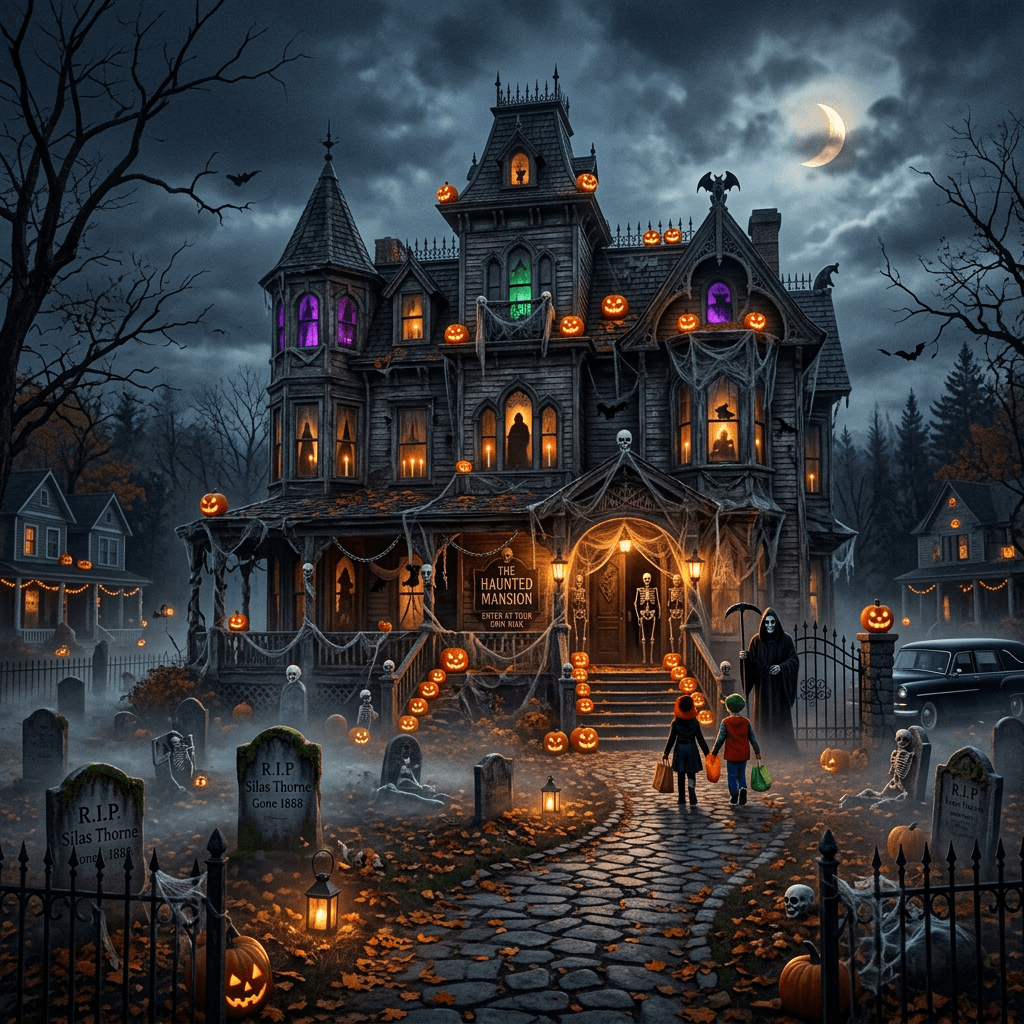
Ask anyone who works in an old building, and they’ll tell you: things feel different in October.
It’s not just decorations and pumpkin spice. There’s a reason haunted houses, historic homes, and old bed and breakfasts seem to come alive this time of year—and it’s rooted in centuries of tradition, not just modern spookiness.
The Thinning Veil
Much of Western ghost lore traces back to Samhain, the ancient Celtic festival marking the end of harvest and the start of winter. Celtic tradition held that around this time, the boundary between the living world and the spirit world grew thin, making it easier for spirits to cross over. Halloween as we know it inherited much of that symbolism, which is part of why late October feels like the “season” for hauntings, even in places with no direct Celtic connection.
Shorter Days, Longer Shadows
There’s a practical element too. As daylight hours shrink, we simply spend more time in darkness, and our senses behave differently in low light. Creaks, drafts, and shadows that go unnoticed in July suddenly feel significant in October. Old houses, with their settling wood and shifting temperatures, tend to “perform” more in these conditions.
Storytelling Season
Fall has long been associated with harvest gatherings, fireside tales, and oral tradition—including ghost stories passed down through families and communities. Appalachian folklore in particular is rich with this kind of storytelling, tied closely to the mountains, the seasons, and the isolation of rural life.
Put those threads together—old superstition, changing light, and a cultural appetite for a good scare—and it’s easy to see why haunted houses seem to wake up every autumn.
If you’ve ever wanted to spend a night somewhere history runs deep, there’s no better season to do it.
Book your stay at Nickerson Snead House this fall.


Leave a Reply